Don Manuel walked without pain again
Don Manuel was 72 years old, and every morning began the same way: he woke up with stiff knees and a pain that had accompanied him for years. What seemed simple for most people—getting up from a chair or walking to the corner store—had become a tremendous challenge for him.
Little by little, he stopped doing the activities he enjoyed most. He no longer accompanied his grandchildren to the park or participated in family gatherings the way he once had. He felt that pain was taking away more than his mobility—it was taking away his quality of life.
Why does this pain occur?
Osteoarthritis is a degenerative condition that affects the articular cartilage, the smooth tissue that covers the ends of bones and allows joints to move with minimal friction.
Over time, this cartilage wears down, leading to inflammation, pain, stiffness, and reduced function. Millions of people worldwide are affected by this condition, especially older adults.
In addition to mechanical wear and tear, chronic inflammation plays a major role in disease progression and the severity of symptoms experienced by patients.
For years, Don Manuel tried to manage his symptoms with pain medications, anti-inflammatory drugs, and physical therapy. Some treatments provided temporary relief, but the benefits never lasted.
One afternoon, while speaking with a friend who had experienced significant improvement in his joint problems, he heard about regenerative medicine and stem cell therapy for the first time.
At first, he was skeptical. But he decided to learn more.
What Are Mesenchymal Stem Cells?
Mesenchymal stem cells are specialized cells with regenerative and anti-inflammatory properties.
Scientific research has shown that these cells can release biological factors capable of modulating inflammation, supporting tissue repair, and stimulating the body’s natural healing mechanisms.
Rather than directly replacing damaged tissue, much of their therapeutic effect appears to come from their ability to create a biological environment that supports recovery and healing.
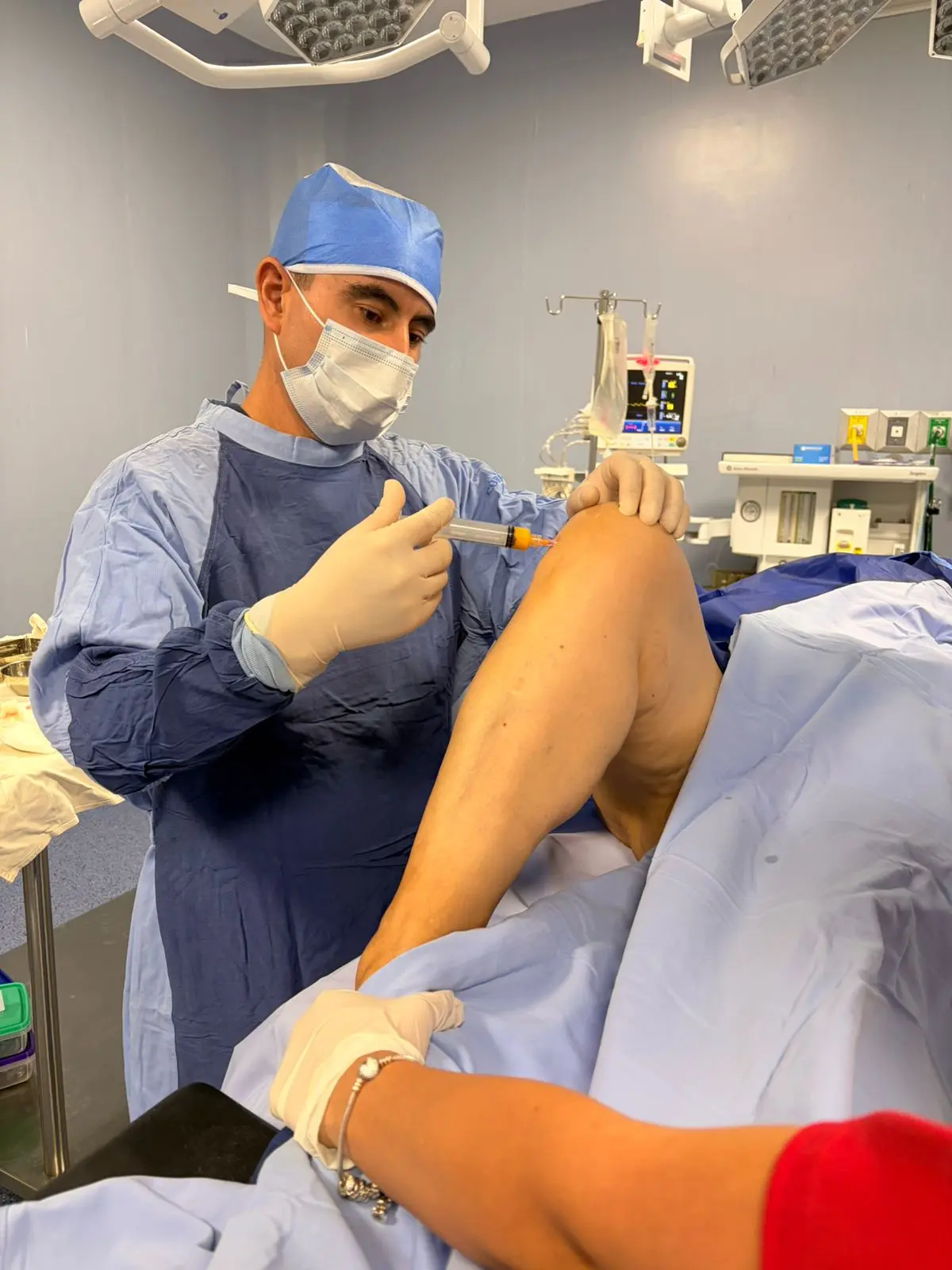
After undergoing a comprehensive medical evaluation with **Dr. Eduardo Ordoñez, a specialist in Pain Management and Regenerative Medicine**, Don Manuel learned that he could be a candidate for regenerative treatment.
He decided to move forward.
The procedure was performed by medical specialists, followed by a structured monitoring and rehabilitation program. During the first few weeks, he did not notice dramatic changes, but he began to experience subtle improvements.
Walking became less painful.
Morning stiffness gradually decreased.
Most importantly, he regained something he had almost lost: hope.
How Can Stem Cells Help with Joint Pain?
One of the primary causes of pain in osteoarthritis is persistent inflammation within the joint.
Mesenchymal stem cells produce bioactive substances that may:
• Reduce inflammatory mediators.
• Support tissue repair processes.
• Modulate local immune responses.
• Improve the biological environment within the joint.
Clinical studies have demonstrated improvements in pain, mobility, and physical function among patients with osteoarthritis receiving regenerative therapies, although outcomes may vary from person to person.
Three months after treatment, Don Manuel began noticing more significant improvements. He no longer had to stop every few minutes while walking. Climbing stairs became easier. He even returned to taking short walks in the nearby park.
His family noticed something they had not seen in a long time: a constant smile.
Potential Benefits Observed in Regenerative Medicine
Research conducted over recent years suggests that regenerative therapies may help:
• Reduce chronic pain.
• Improve joint mobility.
• Decrease inflammation.
• Enhance physical function.
• Improve quality of life.
• Reduce dependence on certain pain medications.
It is important to note that regenerative medicine is not a definitive cure for osteoarthritis, and every patient requires an individualized evaluation by qualified healthcare professionals.
Six months after treatment, one of the most emotional moments of Don Manuel’s journey took place.
His youngest granddaughter asked him to go for a walk in the park with her.
Years earlier, he would have declined because of the pain.
But this time was different.
He took her hand, and together they walked for several minutes without needing to stop.
As he watched his granddaughter run and play, he realized he had regained something truly priceless: the ability to fully enjoy the moments that make life meaningful.
Regenerative Medicine: A New Hope
Regenerative medicine represents one of the most promising advances in the management of musculoskeletal conditions associated with pain.
Thanks to scientific research and advances in biomedical technology, innovative therapies are now available that aim to support the body’s natural healing and repair processes.
Don Manuel’s story reflects the experience of many patients seeking to regain mobility, independence, and well-being.
Because when pain no longer controls your life, you can once again enjoy what truly matters: walking, spending time with loved ones, smiling, and living each day with greater freedom.
Dr. Eduardo Ordoñez**
Specialist in Pain Management and Regenerative Medicine
Consult with a qualified regenerative medicine specialist to learn whether this type of treatment may be appropriate for your individual situation.
Vital Core, 099 785 0298
City: Cuenca